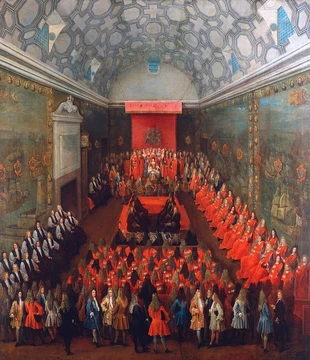
Leopold II, Holy Roman Emperor
Penultimate Holy Roman Emperor; abolished capital punishment in Tuscany.

He was a son of Empress Maria Theresa and Emperor Francis I, and the brother of Queen Marie Antoinette of France.
- field
- Monarchy
- nationality
- Austrian
- known_for
- Abolition of death penalty and torture in Tuscany; moderate enlightened absolutism
Lore & Background
He introduced the Leopoldine Code, ordered the destruction of execution instruments, and banned torture. He succeeded his childless brother Joseph II and ruled for barely two years, facing revolutionary disorders in France and threats to his sister Marie Antoinette.
Reader's Guide
Leopold II's significance lies in his brief but impactful reign as Holy Roman Emperor and his longer rule in Tuscany, where he implemented pioneering reforms. As emperor, he faced the growing French Revolution and sought to pacify his domains through concessions, though he also reversed some of his brother Joseph II's reforms, such as forcing Bohemian serfs back into servitude. His legacy is that of a shrewd, sensible monarch who balanced enlightened ideals with pragmatic governance, though his constitutional plans for Tuscany remained unrealized.
Did You Know?
- Leopold was the brother of Queen Marie Antoinette of France and succeeded his childless brother Joseph II as Holy Roman Emperor.
- He granted the Academy of Georgofili his protection and enlarged La Specola with medical waxworks to promote empirical observation.
Frequently Asked Questions
Why is Leopold II important in the context of enlightened absolutism?
He practiced what historians call moderate enlightened absolutism, using his sovereign power to implement progressive legal reforms rather than expanding autocratic control. His Tuscan reforms demonstrated that an absolute ruler could voluntarily limit state violence, influencing later liberal legal traditions across Europe.
More in Monarchs And Nobility 1-24
Elsewhere in the Monarchs And Nobility universe
Spotted an error? Know more?
This is a living reference — every entry is fact-audited, and reader corrections feed straight into our audit queue. Suggest an edit · See this site's audit record